Models of success and merchants of simplicity

jasonleow • 7 Sept 2024 •
As a consultant I understand the appeal of a nifty framework. Makes clients feels like they suddenly have a better grasp on the complexity of their problem. But it’s also a crutch. When you model reality into neat categories and linear steps, you lose some agility and flexibility compared to when you were open and adaptive to anything.
It helps you understand reality at the expense of being able to truly see it if and when things changes, especially if you’re beholden to that model of reality you set in the past. It’s helpful when the dynamics of the problem is relatively static. Not so good is things are in flux and volatile. And few things are more volatile and uncertain as entrepreneurship and running startups.
And so now when I see frameworks in the indie hacker, solopreneur scene, my radar comes up:
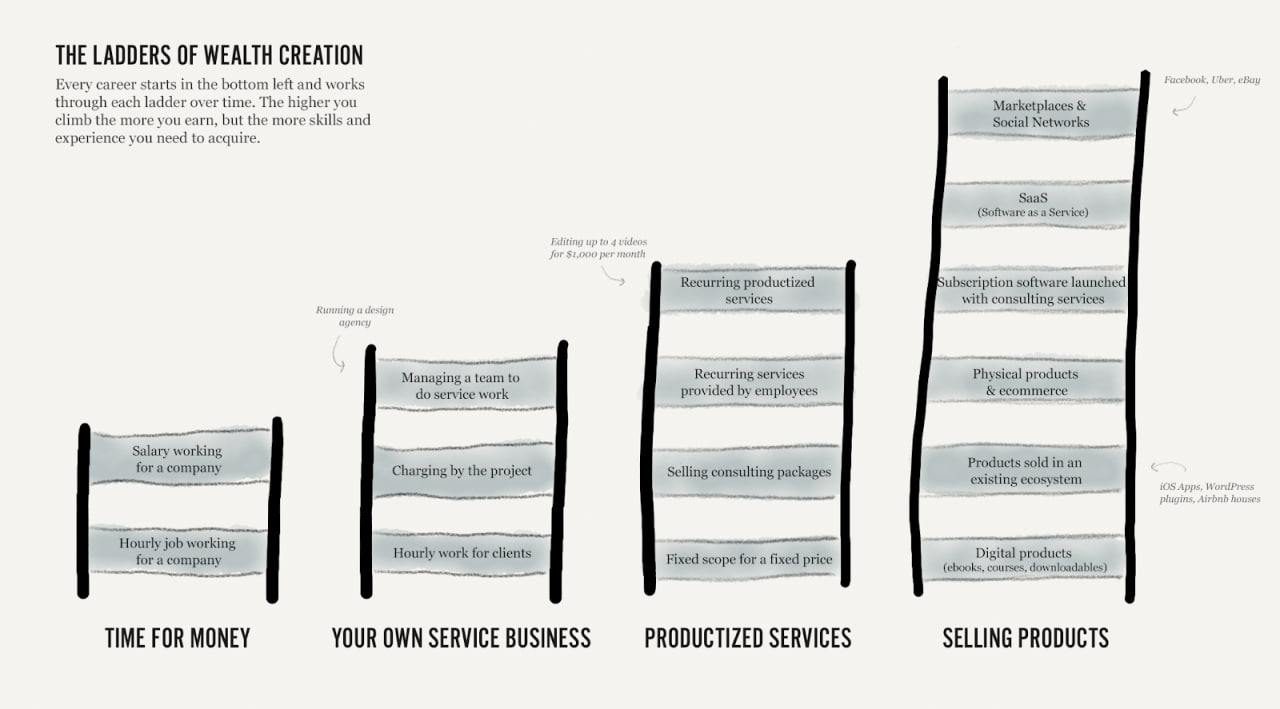
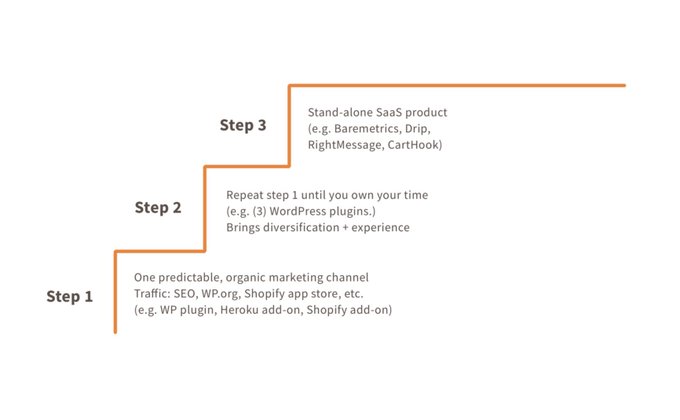
In the past I used to think, oh I didn’t follow this, that’s why my products didn’t succeed. I should have started from the bottom of the ladder/stairs instead. It assumes this entrepreneurship game is a linear one.
Now I think there’s more to it.
Such models are good way to visualize how to build skill as an indie hacker/solopreneur, yes. It makes sense that it’s easier—skill level wise—to write an ebook and launch it on Gumroad, than to build and grow a SaaS to profitability.
But such models are probably poor at predicting product success, even if one followed the bottom stair after another. Yes, there’s a correlation between skill and success, but opportunity and luck don’t come neatly by stairs, and those are important factors too when it comes to product success.
If only profitability was as simple and easy as 123, climbing up each level…
I wish that was true, tbh. But cold hard reality isn’t. I can show you as many folks who started their indie hacking journey at the SaaS level and succeeded, as folks who started from info products level. The diversity, complexity and “anything goes” nature of entrepreneurship shows the reality, not the neat models. And trying to view this game through nice and neat lenses might blind you to opportunities right under your nose. Imagine saying “Oh yeah this SaaS idea is cool and has potential, but I should work on something lower level first”.
We might laugh at the absurdity, but it can happen. It happened. It will happen. Remember writing business plans before you even validate your product? We laugh at it but people still do it now.
So tl;dr - Yes, build skill following the stairs, but don’t let these frameworks dull your business sense and ability to go after a good opportunity when it arises.
Don’t be fooled by merchants of simplicity.
Life is a lot more random than it seems.
Comments
@haideralmosawi YES! Models are tools, tools are meant to help, but they start to hinder more than help when we give them too much power over our own intuition!
“All models are wrong, but some are useful”. George E. P. Box
Some people look at models like gospel. Especially when a model has “clicked” into a situation or one of their beliefs, which is when confirmation bias kicks in.
It can really dangerous, depending on the situation, and very frequently quite damaging!

Awesome quote
“All models are wrong, but some models are useful”
No model can capture the complexity of reality, which is why knowing the distinction between model and reality is important (like what you did in this post!)
We really need to tap into our own situation so that we don’t abandon opportunities because conventional advice encourages against them.